
How to Buy Gold in Canada (2026): Best Ways to Invest in Gold + Top Dealers

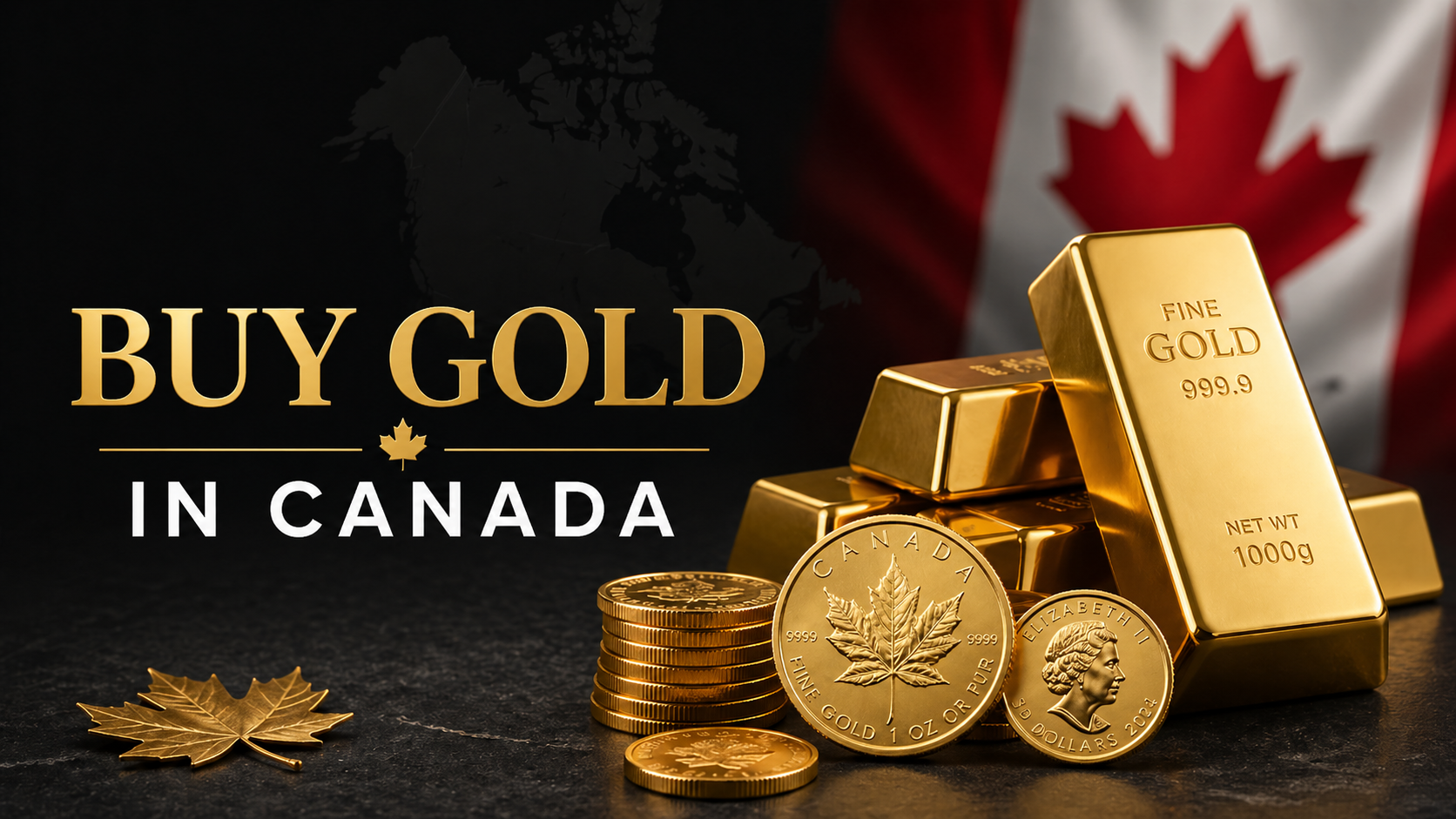
If you’re thinking about adding gold to your portfolio, and you’re wondering where and how to buy physical gold in Canada safely (and without overpaying), you’re in the right place. In this guide, you’ll learn why many Canadians use gold as a long-term hedge, how to buy it in a tax-smart way (RRSP/TFSA options), and which dealers tend to have the strongest reputations.
- Start with mainstream bullion (ex: 1 oz Gold Maple Leafs, common bar sizes from reputable refiners).
- Compare premium + buyback spread, not just the “sale price.”
- If you want RRSP/TFSA exposure, many people use ETFs, while physical bullion generally requires a self-directed structure and strict “qualified investment” rules. This Questrade page is a good place to start.
- How to invest in gold in Canada (overview)
- Why Canadians are buying gold (2026 reality check)
- ETFs vs physical gold
- Pros and cons of buying gold
- RRSP vs TFSA for gold
- What matters when choosing a dealer
- Top Canadian gold dealers (2026 shortlist)
- Tax basics: GST/HST + capital gains
- Common mistakes to avoid
- FAQ
What One Ounce of Gold Actually Costs in Canada Today
Most guides to buying gold stop at "shop around for a good premium" and leave you to work out what good looks like. So I did the shopping. On August 13, 2026 I pulled live published prices for the most commonly bought gold product in this country, the 1 oz Gold Maple Leaf, from four Canadian sellers, and measured each against a spot price of roughly C$6,170 per ounce at the same time.
| Seller | Product listed | Price | Over spot | Notes |
|---|---|---|---|---|
| TD Precious Metals | 1 oz Gold Maple Leaf (2026) | $6,384.09 | +3.5% | Bank, single unit price |
| Sprott Money | 1 oz Gold Maple Leaf (2026) | $6,293.94 | +2.0% | Volume tier, listed as low as |
| AU Bullion | 1 oz Gold Maple Leaf (random year) | $6,251.44 | +1.3% | Circulated, not current year |
| Bullion Mart | 1 oz Gold Maple Leaf (random year) | $6,228.31 | +0.9% | Volume tier, random year |
| Silver Gold Bull | 1 oz Gold Maple Leaf (2026) | Not published | n/a | Price shown after sign in |
Prices captured within one session on August 13, 2026. Spot moved slightly during the capture, so treat the premium column as accurate to within a few tenths of a percent. Shipping, insurance and payment method surcharges are not included, and they can change the ranking on a small order.
How to read that honestly
Two of those rows are not a like for like comparison and I am not going to pretend otherwise. Random year and circulated coins are always cheaper than a sealed current year coin, so AU Bullion and Bullion Mart are not undercutting the others by as much as the raw numbers suggest.
The clean comparison is the first two rows. Both are the same 2026 Royal Canadian Mint coin. TD charges C$6,384.09, Sprott Money charges C$6,293.94. That is C$90 on a single coin, or a premium of 3.5% against 2.0%. On a ten coin purchase the gap is roughly C$900.
- The bank is the most expensive of the four. Not outrageously so, but consistently.
- Watch for "as low as" pricing. Several dealers advertise a volume tier. If you are buying one coin you will pay more than the headline.
- Random year coins are the quiet value play if you do not care about the date on the coin. The gold content is identical.
- A dealer who will not show a price without a sign in is telling you something. Compare before you register.
- Do the maths yourself: price divided by ounces, compared against the live spot figure at the top of this page. It takes ten seconds and it is the only number that matters.
How to invest in gold in Canada (beginner-friendly overview)
If you’re new to gold investing, the process in Canada is simpler than most people expect. At a high level, there are four common ways Canadians invest in gold, each with different trade-offs.
- Physical gold: buying gold coins or bars from a reputable dealer and storing them securely.
- Gold ETFs and funds: buying gold-backed or gold-related funds inside a brokerage account.
- Gold mining stocks: investing in companies that mine and produce gold.
- Registered accounts (RRSP/TFSA): holding gold exposure (often via ETFs, or via specific “qualified investment” structures for physical bullion) for tax efficiency.
Most Canadians who search for “how to buy gold in Canada” are usually deciding between physical gold vs ETFs, and whether to hold gold inside a registered account (RRSP or TFSA) or outside one. This guide walks you through each option so you can choose what actually fits your goals.
Why Canadians are buying gold (2026 reality check)
We live in uncertain times. For many Canadians, the biggest investing fear is simple: drawdowns. When markets swing hard (or inflation stays stubborn), gold often shows up in portfolios as a “sleep-better” asset rather than a get-rich-quick trade.
Gold is not magic. It can go down. It can underperform stocks for long stretches. But gold has also held value across decades, and it’s globally recognized, liquid, and hard to “print.” That combination is why many Canadians treat it like portfolio insurance.
- Tangible asset: physical bullion is not a corporate IOU.
- Globally priced: gold trades worldwide with tight spreads on common products.
- Portfolio hedge: often used to reduce volatility alongside stocks and bonds.
- No counterparty risk (physical): you’re not relying on an issuer to stay solvent.
- Long-term store of value: tends to hold purchasing power better than many fiat currencies over very long periods.
Internal reading if you want to go deeper: gold price history & pricing basics, gold-related funds in Canada, and gold mining stocks (pros/cons).
Gold investing in Canada: the 2 ways most people do it
Before choosing how to get exposure to gold, it helps to understand the trade-off between owning the metal directly and owning a financial product tied to gold prices.
| 🪙 Physical Gold | 📄 Paper Gold |
|---|---|
| What you own: Actual gold bullion, coins, or bars that can be held directly or stored through an approved facility. |
What you own: Shares, units, or securities linked to gold, such as ETFs, mutual funds, mining stocks, or gold-related funds. |
| Best for: Investors who want direct exposure to a tangible asset and prefer owning metal outside the traditional financial system. |
Best for: Investors who want convenience, liquidity, and easy trading through a brokerage or registered investment account. |
| Key advantage: You have exposure to a real physical asset, which some investors prefer during periods of inflation, currency weakness, or market stress. |
Key advantage: Paper gold is usually easier to buy, sell, rebalance, and hold inside regular investment accounts. |
| Main drawback: Storage, insurance, dealer spreads, and custody rules can add complexity, especially inside registered accounts like RRSPs or TFSAs. |
Main drawback: You usually do not own redeemable physical gold directly, and some products add market, management, issuer, or company-specific risk. |
| Liquidity: Can be sold through dealers, but pricing depends on spreads, product type, market demand, and how the gold is stored. |
Liquidity: Often highly liquid, especially for large ETFs and publicly traded gold stocks, since they can be bought or sold during market hours. |
| Registered account fit: Physical gold can be held in certain registered accounts when it meets CRA requirements and is stored through an eligible custodian or trustee structure. |
Registered account fit: Gold ETFs, gold funds, and mining stocks are often easier to hold inside RRSPs, TFSAs, RRIFs, LIRAs, and other investment accounts. |
| Investor takeaway: Physical gold may appeal more to investors who want a long-term store of value and the reassurance of owning real bullion. |
Investor takeaway: Paper gold may appeal more to investors who want simple portfolio exposure to gold without dealing with storage or physical custody. |
RRSP vs TFSA for gold: how most Canadians decide
For retirement-focused investors, the decision often comes down to your current vs future tax bracket.
- RRSP: contributions can reduce taxable income today, but withdrawals are taxed later.
- TFSA: no deduction today, but withdrawals are tax-free later.
What a lot of people miss: the best answer is often “some of both,” especially if you’re not sure where your income will land in retirement.
2026 contribution basics (don’t guess)
- RRSP: your personal limit is on your CRA Notice of Assessment (based on 18% of earned income, up to an annual maximum, minus pension adjustments). Always confirm your exact room with CRA.
- TFSA: room accumulates if you were 18+ and a Canadian resident. Unused room carries forward.
Authority references (Canada): CRA TFSA overview and CRA RRSP overview.
Best places to buy gold in Canada (what matters most)
Ignore hype. When you’re choosing a gold dealer in Canada, focus on:
- Transparent pricing: live prices, clear premiums, clear buyback policies.
- Reputation: long operating history + strong third-party reviews.
- Product selection: mainstream bullion options (coins/bars) with recognizable mints.
- Shipping + insurance: fully insured shipping and clear delivery timelines.
- Storage pathway (optional): if you want professional vaulting, make sure it’s well-defined.
Where to buy gold in Canada: online vs local dealers
Canadians typically buy gold either from local precious metal shops or online dealers.
Local dealers allow face-to-face transactions and immediate possession, but pricing may be higher and selection more limited.
Online dealers often offer lower premiums, a wider range of products, and insured delivery across Canada. For larger purchases, online platforms are frequently the preferred option.
Regardless of where you buy, always verify dealer reputation, pricing transparency, buyback policies, and insurance coverage.
How to compare gold prices in Canada (premium + spread)
To avoid overpaying, compare dealers using two numbers:
- Premium: what you pay above the spot price when you buy.
- Buyback spread: the difference between what a dealer sells for and what they’ll pay you to buy it back.
A low “sale premium” is not always the best deal if the buyback price is weak. For long-term investors, a transparent buyback policy matters just as much as the upfront price.
Top Canadian gold dealers (2026 shortlist)
Below are three well-known Canadian dealers that many investors compare. Always verify current premiums, delivery terms, and buyback policy before placing an order.
1) Silver Gold Bull

Website: Silver Gold Bull (Canada)
Why people choose them: large bullion selection, frequent promos, straightforward online ordering, and strong brand recognition in Canada.
Third-party ratings: ⭐ ⭐ ⭐ ⭐ ⭐ (4.6/5 on Trustpilot) Trustpilot (view source)
Read our internal breakdown here: Silver Gold Bull review.
2) Sprott Money

Website: Sprott Money
Why people choose them: well-known Canadian precious metals brand, wide product range, and institutional credibility within the broader Sprott ecosystem.
Third-party ratings: ⭐ ⭐ ⭐ ⭐ (4.1/5 on Trustpilot) Trustpilot (view source)
More details: Sprott Money review.
3) Border Gold

Website: Border Gold
Why people choose them: popular online dealer with a strong selection of bullion products and a straightforward ordering process.
Third-party ratings: ⭐ ⭐ ⭐ ⭐ ⭐ (4.5/5 on Trustpilot) Trustpilot (view source)
Related page: Border Gold review.
Is buying gold taxable in Canada?
This is one of the most common questions Canadians ask before investing in gold.
GST/HST: Investment-grade precious metals that meet Canada’s “precious metal” definition (purity thresholds and specific forms like bars/ingots/coins/wafers) are often supplied in a way that is not subject to GST/HST in many typical bullion transactions. Product details matter, so it’s smart to confirm what you’re buying is investment-grade bullion rather than a collectible/numismatic product. Helpful references: CRA GST/HST definitions (precious metal) and CRA guidance on precious metals as financial instruments.
Capital gains: If you sell gold held outside a registered account at a profit, capital gains tax may apply. As of 2026, the federal government has stated the capital gains inclusion rate remains one-half (meaning 50% of a capital gain is included in income). See: Government announcement on inclusion rate.
Registered accounts: When gold exposure is held inside an RRSP or TFSA, taxation depends on the account rules rather than the asset itself. RRSP withdrawals are generally taxable, while TFSA withdrawals are tax-free. For the “qualified investment” framework, see: CRA Income Tax Folio: Qualified Investments.
Because tax rules can change and depend on your situation, many investors confirm details with CRA guidance or a qualified tax professional before making large purchases.
Common mistakes Canadians make when buying gold
- Buying obscure products: if resale matters, don’t start with niche collectibles.
- Ignoring total cost: compare premiums, shipping, payment method fees, and buyback spread.
- Over-concentrating: gold is usually a hedge, not your entire portfolio.
- Weak storage plan: home storage is fine for some people, but only if security is real.
FAQ: buying gold in Canada (2026)
Is buying gold in Canada taxable?
Is gold a good investment in Canada right now?
Can I buy gold through my bank in Canada?
What is the minimum amount needed to invest in gold in Canada?
What gold products are easiest to resell in Canada?
Is it better to buy gold coins or bars?
How much gold should I own in my portfolio?
What’s the safest way to store gold?
How do I avoid getting ripped off when buying gold online?
Bottom line: If you want a simple starting point, compare a few reputable Canadian dealers, stick to mainstream bullion, and make sure your storage plan matches your risk tolerance. If you’re exploring RRSP/TFSA pathways, start with the guide above so you understand what’s actually possible before you spend a dollar.
Price and Premium Questions
How much does 1 oz of gold cost in Canada right now?
What is a reasonable premium to pay over spot in Canada?
Is it cheaper to buy gold from a bank or a dealer?
Do I pay tax when buying gold in Canada?
What is the cheapest way to buy gold in Canada?
Will Your Retirement Weather the Next Financial Crisis?
Gold has been used as an inflation hedge and a way to preserve wealth for millennia. We partnered with Silver Gold Bull, Canada's top-rated gold company (with over 280,000 five-star reviews), to offer Canadians a low-cost and tax-advantaged way to buy gold and silver through an RRSP/TFSA or another retirement plan.
Request More Info
Website: www.SilverGoldBull.ca
Speak to an Expert: (877) 707-4707

About Liam Hunt
Copyright 2026 Gold RRSP - Helping Canadians invest in physical bullion for retirement
